Between my house and workshop, the is a small green area, a lawn with an outdoor bath. Last summer already, with temperatures reaching 40°C, this lawn had suffered a lot, but this year, at 42°C, and two weeks of extreme heat, it didn’t survive. Asking around, neighbors had good success with installation of irrigation systems, and as I would rather adapt to hotter summers than suffering from the view of dry lawn, I decided to take the necessary steps.
With barely 25 m2, I first thought it would be an easy job, but as it turned out, more work than expected.
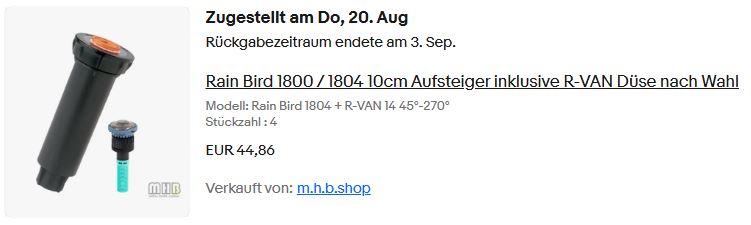
After some planning, the first step was to dig up the soil, and install the watering system. I had checked the sprinklers recommended by the neighbor, so-called Rainbird sprinklers that have a solid reputation. With all the effort of installation, I don’t want to take chances that the sprinklers will fail.
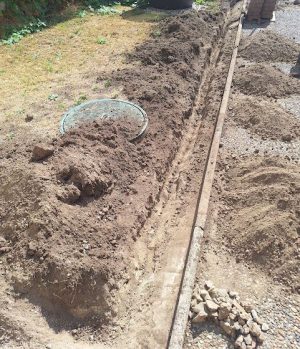
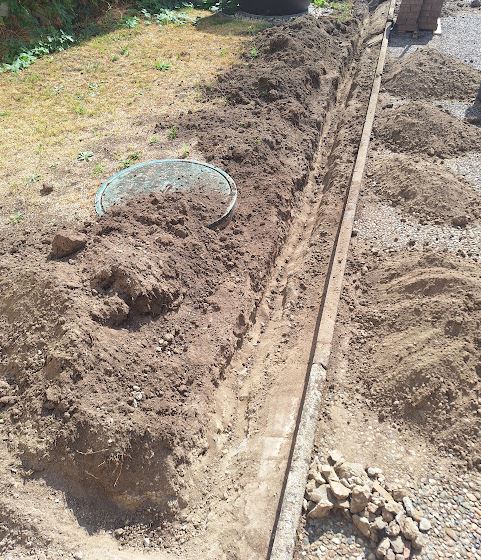
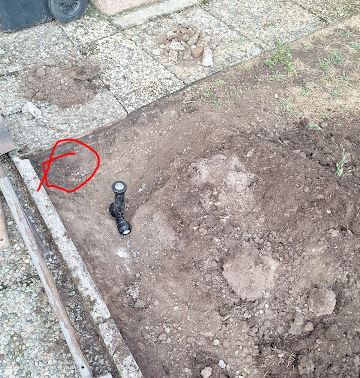
Digging down, there were many troubles discovered. At the locations where the sprinklers need to be put (at the perimeter), concrete. Also in the soil, after about 8 cm, lots of stones and other hard material. The top soil, rather sandy.
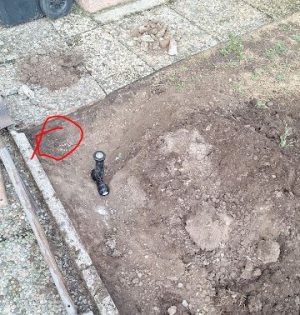
With heavy tools and big drills, finally the concrete obstacles gave in. Time to order the Rainbirds.

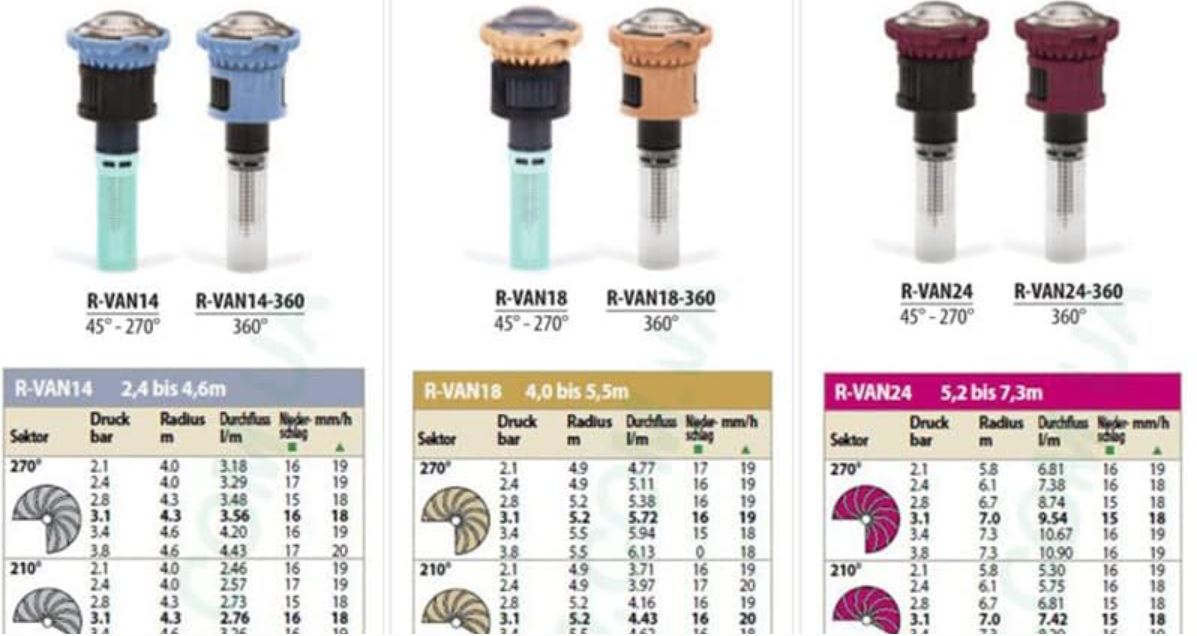
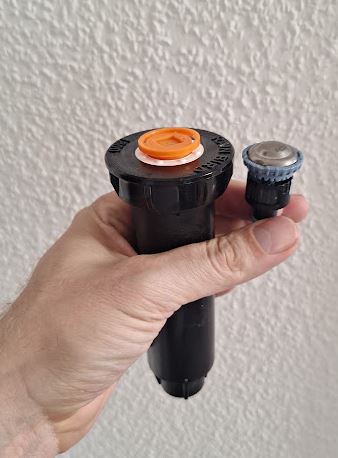
There are various nozzles, I selected the R-VAN14 nozzle, which seems appropriate for the distances. Maybe one I could replace with a little further range R-VAN18 nozzle eventually to reach into the distant corner.
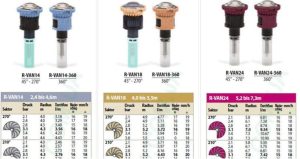
These R-VAN nozzles have multiple jets rather than fine mist, and the droplets nicely water the lawn.
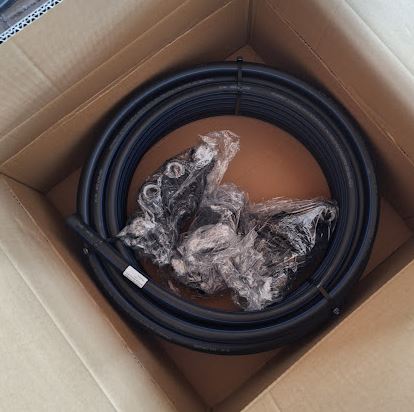
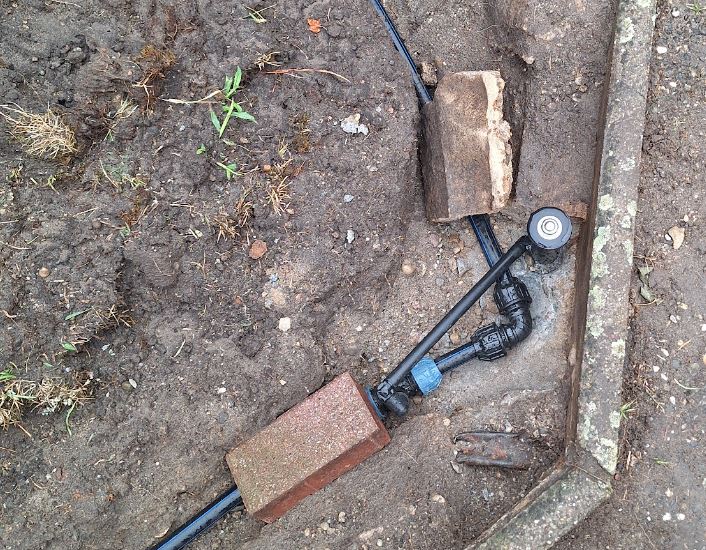
For the piping, I installed fully pressure rated DN25 cold water PE pipe. These are very stable and not affected by stones and similar.
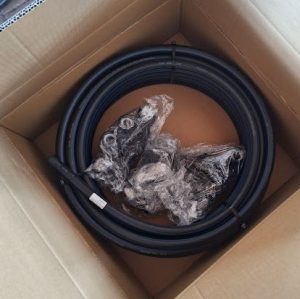
After some waiting, also the Rainbirds arrived, time to proceed with installation.
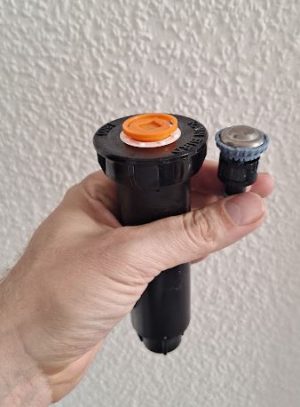
To connect to the main pipe, I used 1/2″ inner thread pipe T fittings and 1/2″ outer thread flexible connections.
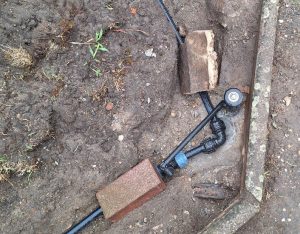
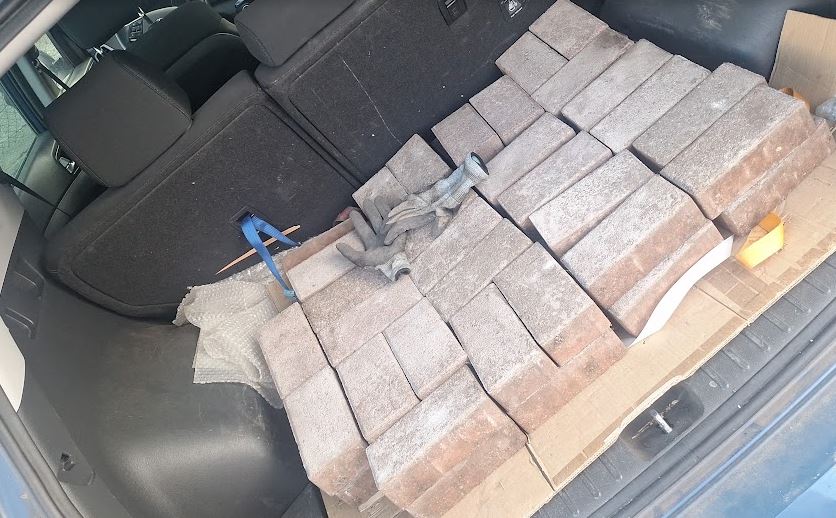
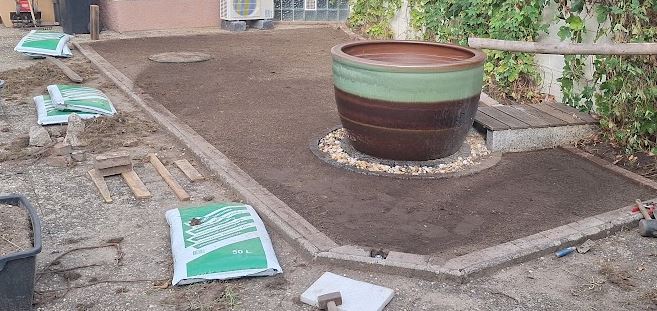
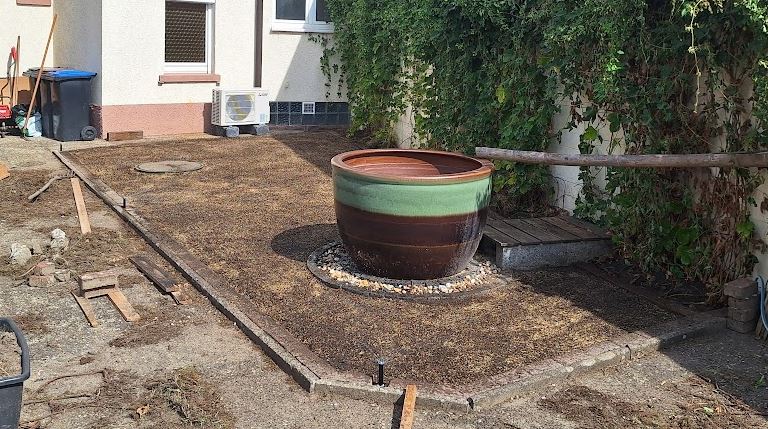
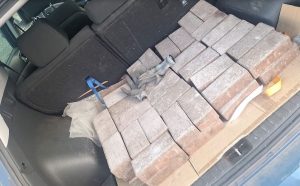
After all the drilling and preparation, the installation went smoothly. To provide a boards, and easier cutting later, I got some used paving stones that matched exactly the type used in other parts of my garden. A friendly guy from the neighboring town had them advertised in the classifieds as “free to pick up”.
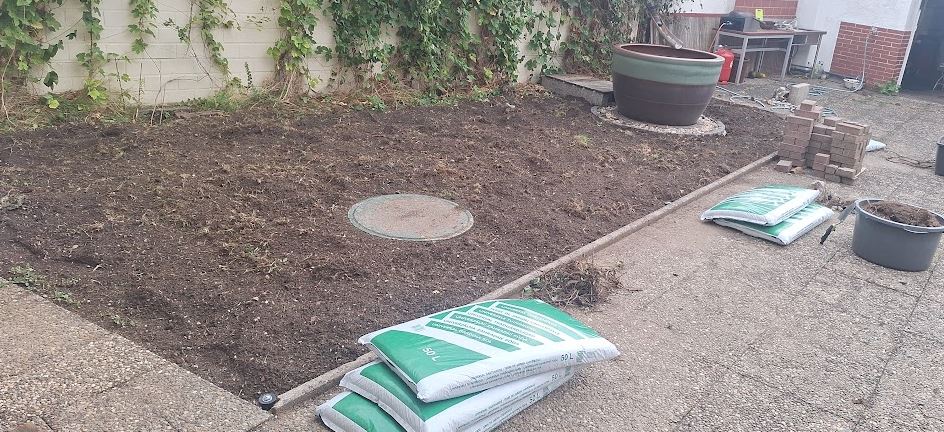
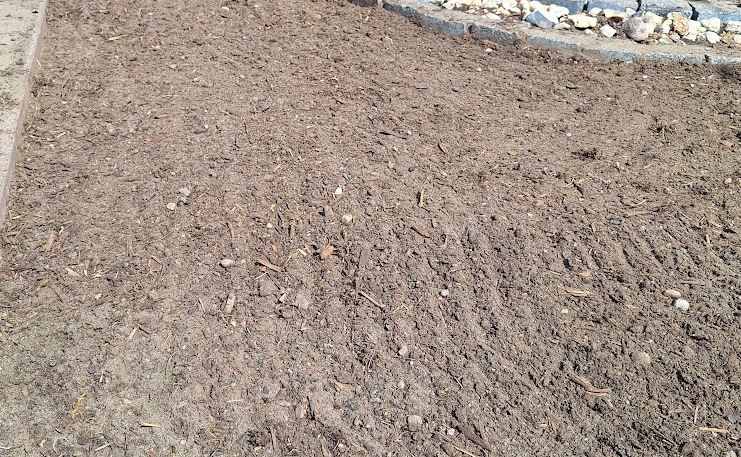
To prepare the soil, I first used an electric tiller to chop up the leftover grass and stones and hard topsoil (mostly sand and small stones). All the old grass removed and all stones large than about 1/2″ removed. Used a wooden board to make sure all is precisely flat. From what I learned, it is imperative to level the area precisely, don’t do a sloppy job.
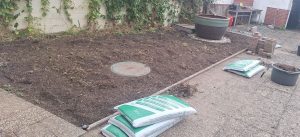
After some repeated leveling and adjustments, removal of all roots, stones, etc. — very tedious work — I was happy to only deal with the 25 m2 here.
Added about 250 L of compost soil (about a large bucket per m2), not a lot, but enough to provide some organic structure to the sand soil.
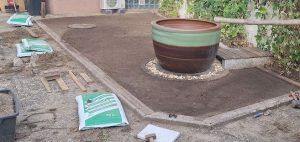
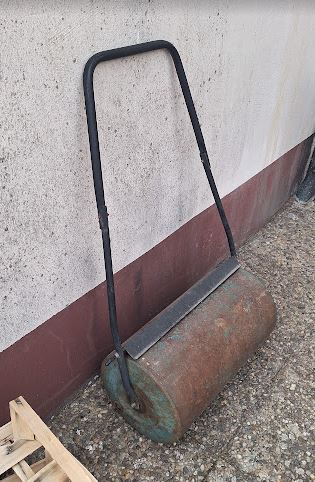
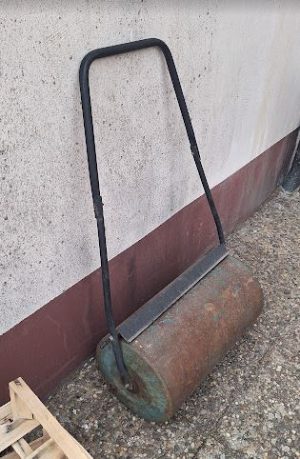
Spreading the compost evenly, more leveling. Finally used a heavy roller that more distant neighbor kindly borrowed me.
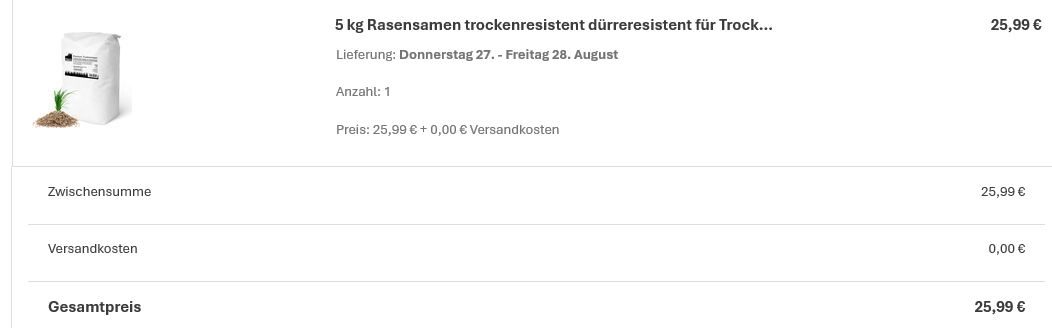
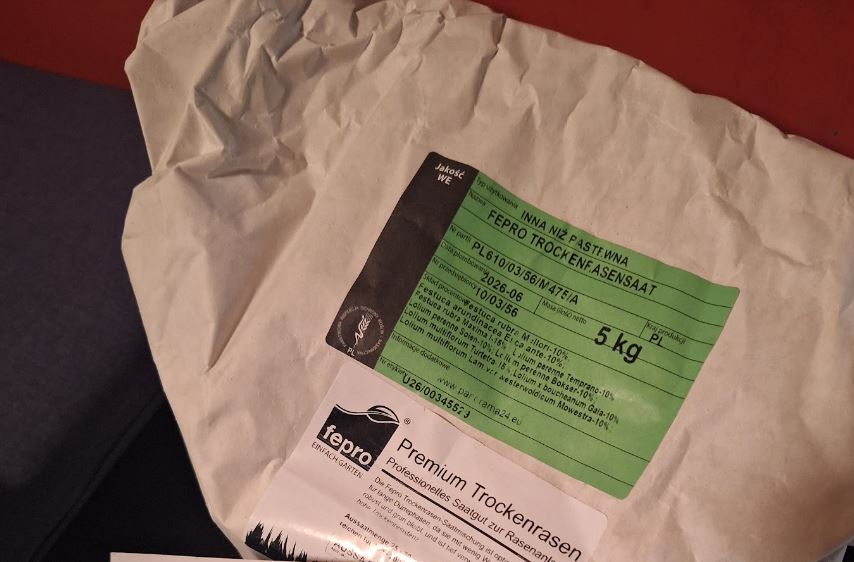
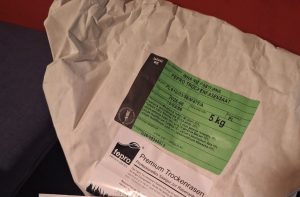
For the grass seeds, I decided on a dry-resistant mixture, but not a hard “desert grass” or similar hardy variety.

The 5 kg are certainly too much, but the often claimed 25 g/m2 needed seemed not quite enough. I added at least 50 g/m2, and more around the (many) corners, edges and other difficult areas.
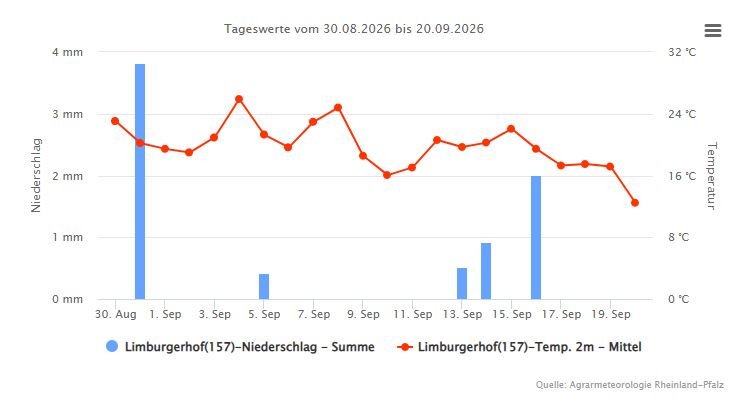
Anxiously watching the weather forecast, a very nice period without heavy rain came up, and eventually, the weather turned out very good. Strong rain in the first days is definitely not good, it will wash away the seeds. Also great heat must be avoided, the fresh grass needs to be moist at all times.
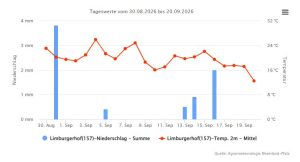
Cold weather below 10°C (at night) is also not good to start a new lawn.
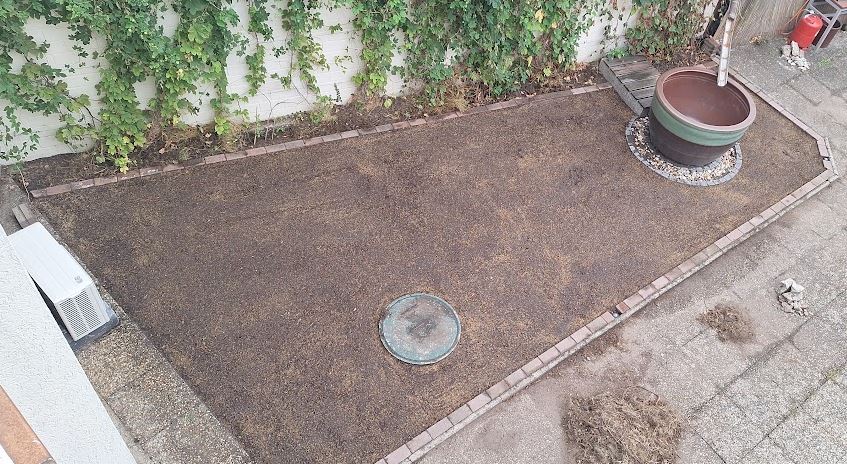
Finally, roughened the surface of the leveled soil, and added seeds by hand as uniformly as possible.
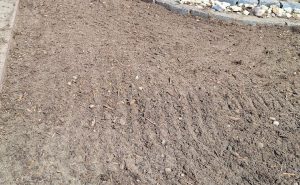
Gently rolling it on the (rather dry) soil with the heavy roller to ensure good soil contact of the seeds.
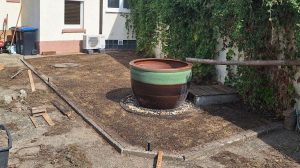
A few days later all is moist, and the sprinklers on twice a day for 15 minutes.
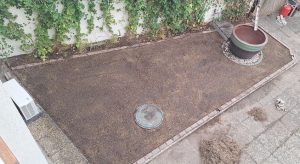
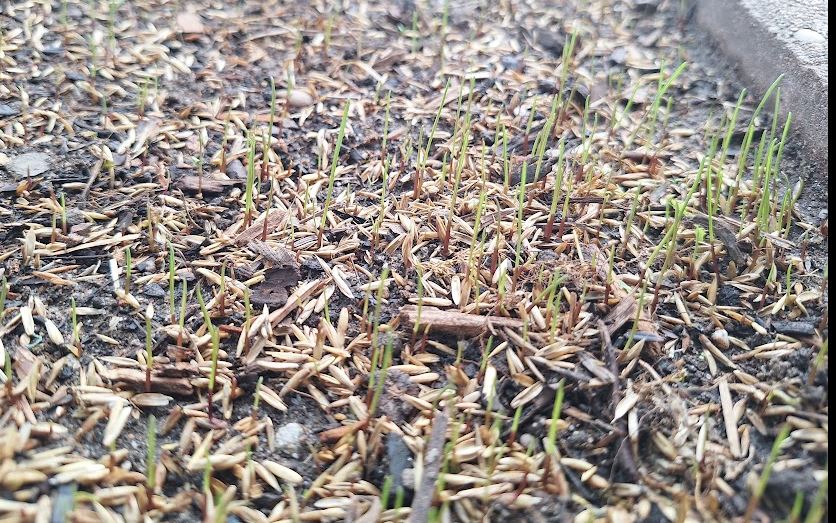
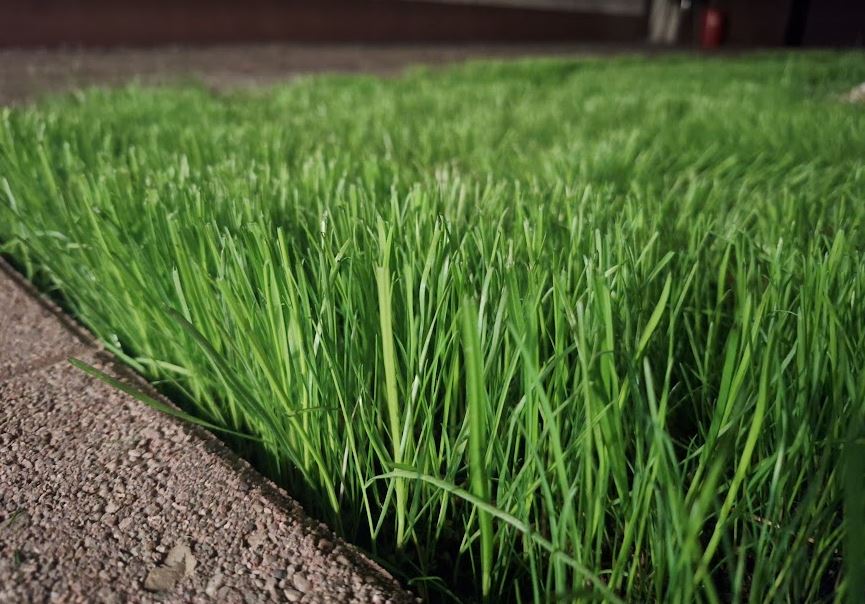
To my great surprise, already after 4 days, we can see the grass grow.
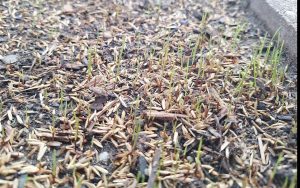
…more and more, faster than expected.
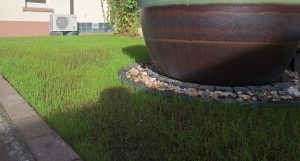
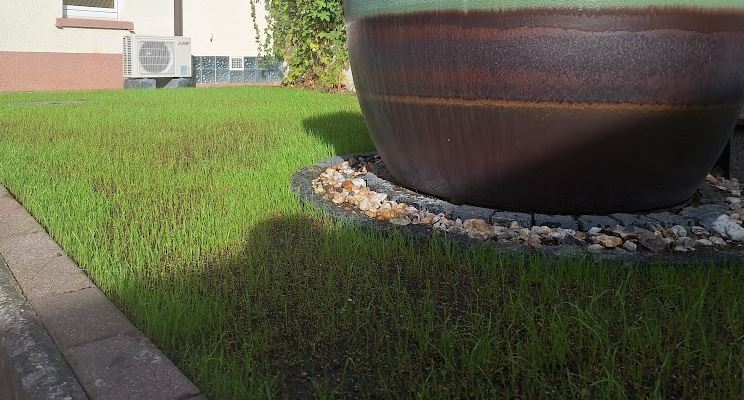
after 2 weeks:
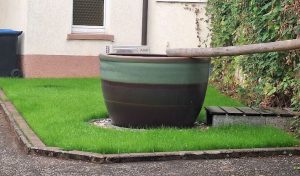
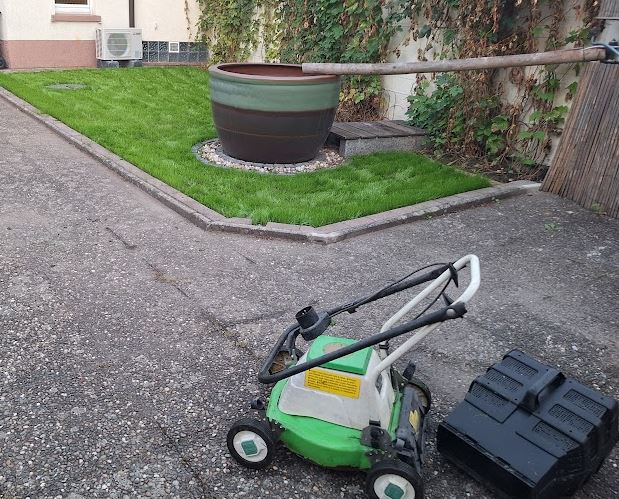
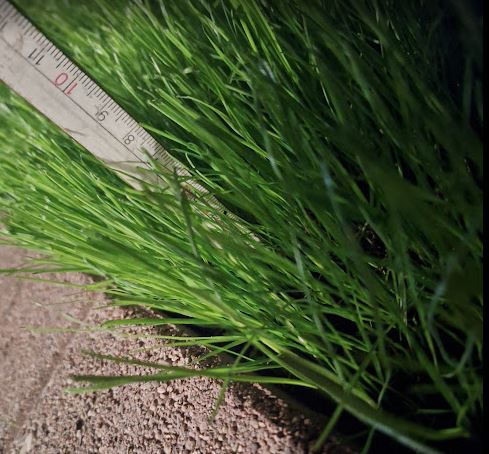
When grown to about 15 cm, for the longest leaves, I did some test to check the roots. These seemed fairly firm and well-developed. So I sharpened the blades and tried a first cut.
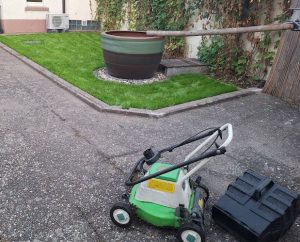
Certainly recommended to do a light cut, and to avoid pulling and turning the mower on the fragile soil and fresh gras.
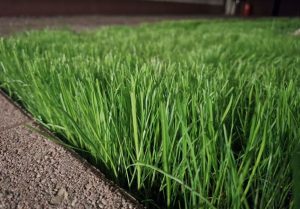
I cut the grass to 8 cm, and collected all the cuts carefully.
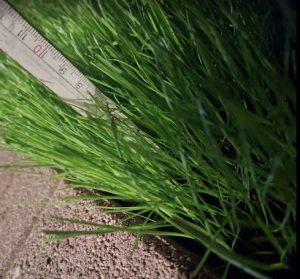
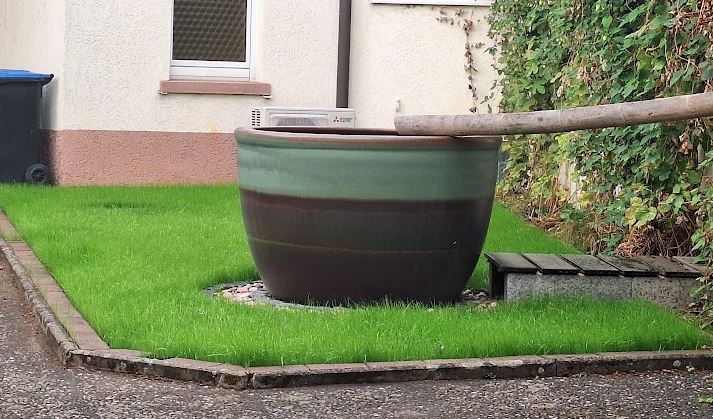
It is such a pleasure and delight to see the lawn green and growing nicely. Will continue to cut it about once a week, depending on weather and growth.
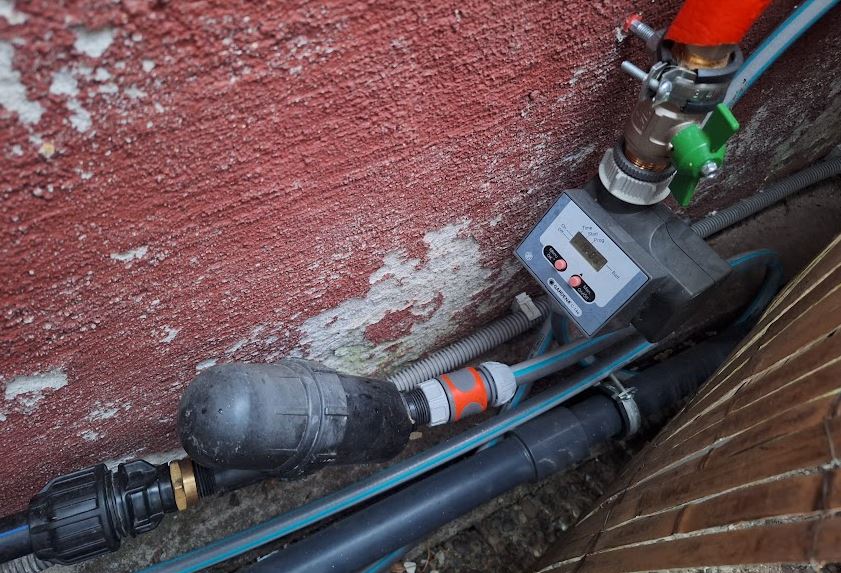
The watering is controlled by a simply Gardena C14e watering controller I still had laying around. The output connects by short hose, with quick connects, to a filter (100 µm nylon filter), which is connected to the DN25 water pipe. It is all water from my own well, so I had to extend the well water pipework a little (using Pipetec 16×2 composite tubing).
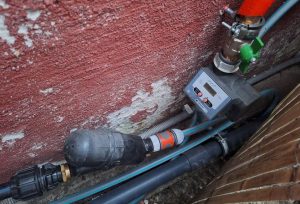
All in all, with the disposal of the waste, the side tasks related to well water, the drilling, concrete repairs, soil treatment, stones – quite a big effort but so glad it seems to pay off already!